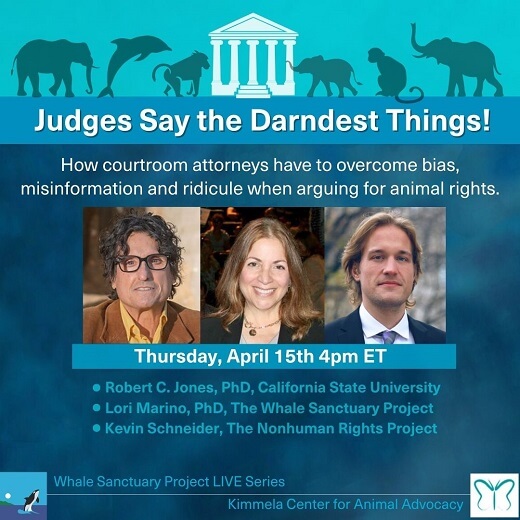
• Judges Say the Darndest Things!

    Why, in this day and age, is it still so hard for judges in courts of law to recognize even the most intelligent of nonhuman animals as having the fundamental legal right to bodily liberty and bodily integrity? We'll explore the inherent biases in how we humans view other animals. 
    Read more.
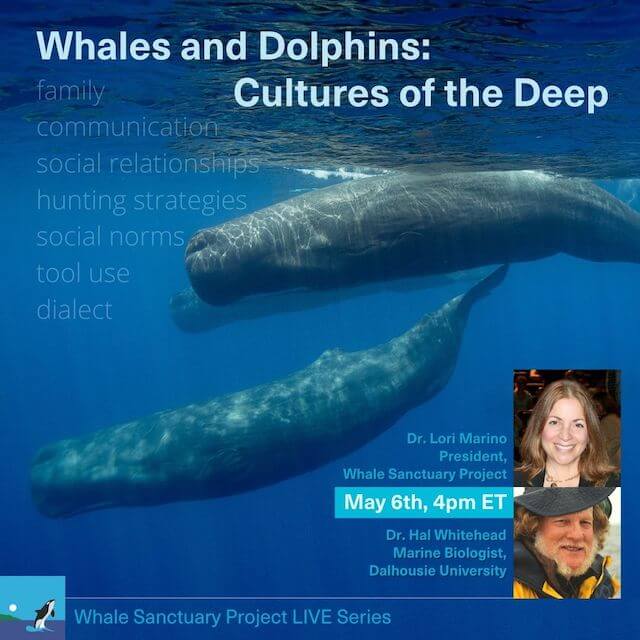
  • Whales & Dolphins: Cultures of the Deep

    Soon after sperm whales started being hunted down mercilessly with harpoons, the success of the whalers dropped dramatically. What happened? The whales learned to foil the hunters. Better yet, they taught their neighboring populations how to do it, too.
    Read more.

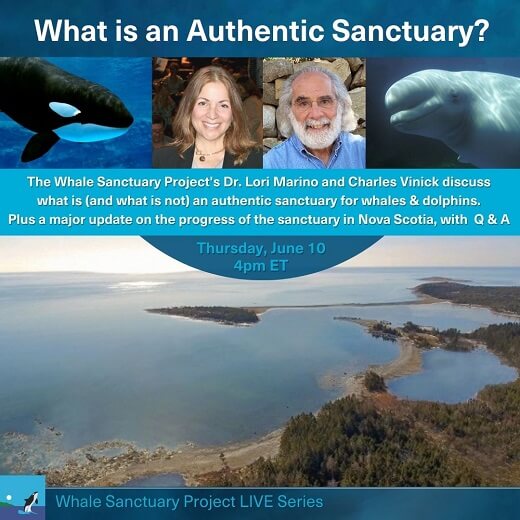
  • What Is an Authentic Sanctuary?

    Dr. Lori Marino, President of the Whale Sanctuary Project, and Charles Vinick, Executive Director, will talk about the four questions you need to ask before visiting any sanctuary. If the answer to any of them is Yes, then it’s not an authentic sanctuary.
    Read more.

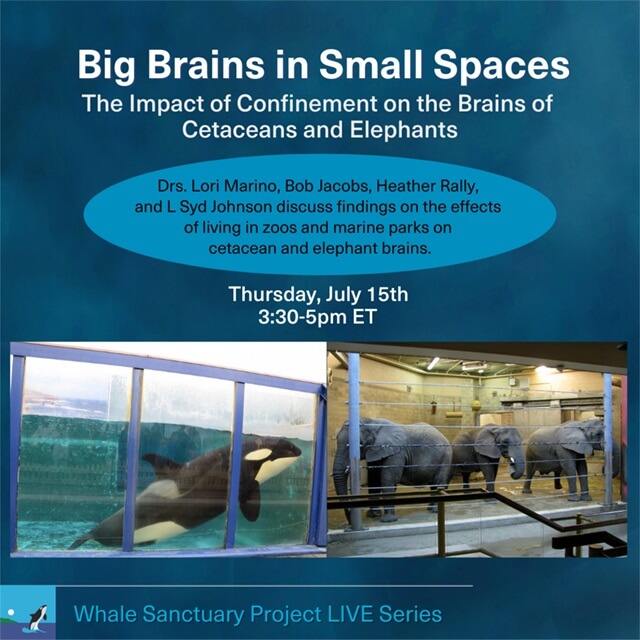
  • Big Brains in Small Spaces

    We explore the potential harms of confinement in zoos and aquariums on the brains of elephants and cetaceans. We discuss the general brain mechanisms that come into play in all animals who are forced to live in chronically stressful, impoverished and highly artificial environments.
    Read more.

  • Cetacean Sanctuaries: Centers for the Study of Natural Communication

    Sanctuaries will provide a more natural setting than aquariums, along with a potentially more accessible and convenient way of studying communication among whales than in the wild. Therefore, sanctuaries will be able to catalyze ways to validate and explore innovative methods of studying whale communication.
    Read more.

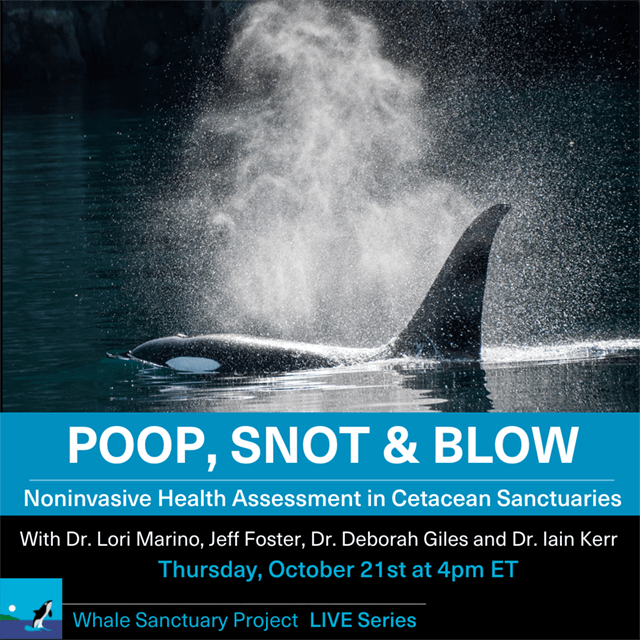
  • Poop, Snot and Blow: Noninvasive Health Assessment in Cetacean Sanctuaries

    At a sanctuary for whales and dolphins – as at any authentic animal sanctuary – health assessments and other essential studies should be as non-invasive and non-intrusive as possible. Therefore, an important aspect of sanctuary work is the development of methods that do not disturb the whales. Three experts who study whale health and behavior in the wild join us for a fascinating conversation.
    Read more.

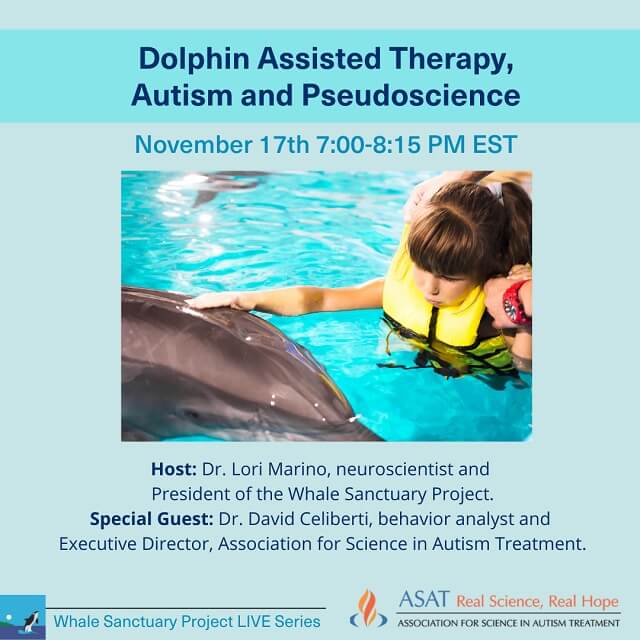
  • Dolphin Assisted Therapy, Autism and Pseudoscience

    Dolphin Assisted Therapy (DAT) is a type of dolphin swim program that is purported to be an effective treatment for autism and other conditions. Parents and others are charged thousands of dollars and led to believe that they are engaging in real therapy. We'll discuss why it is a pseudoscience and how the practices that force dolphins into DAT performances are exploitive and abusive.
    Read more.

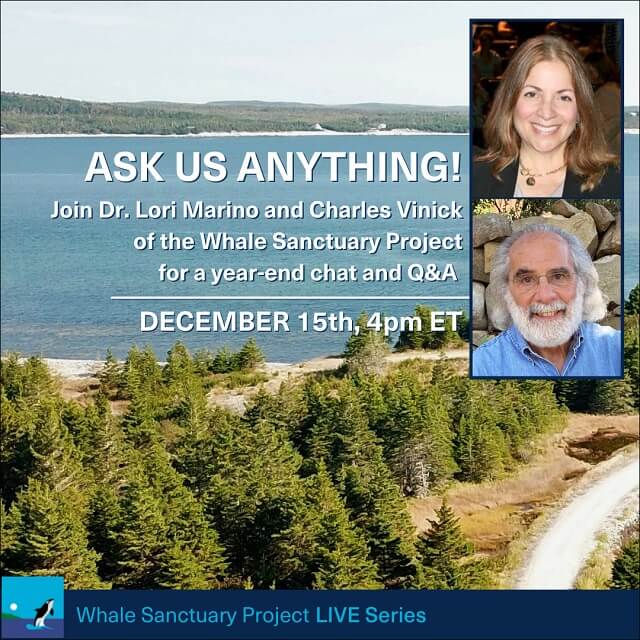
  • Ask Us Anything!

    Join Dr. Lori Marino, President and Founder, and Charles Vinick, Executive Director, for a year-end chat about the Whale Sanctuary Project, including major accomplishments of this year and what we're looking to achieve next year.

    Read more.

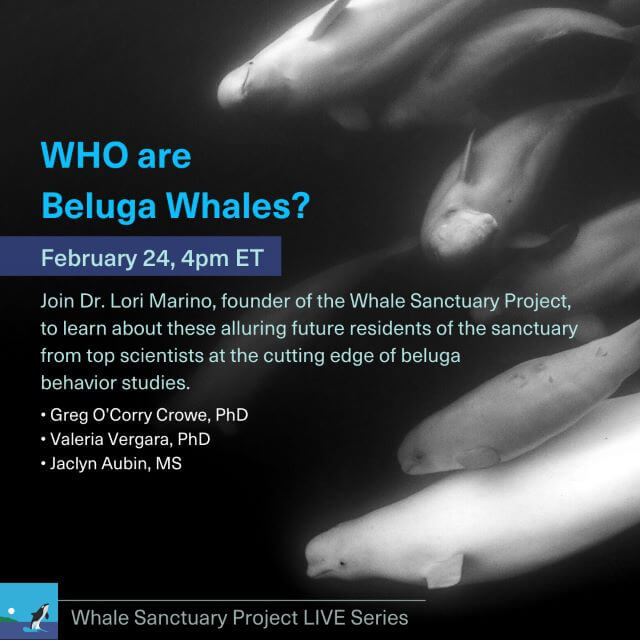
  • Who Are Beluga Whales?

    Three top scientists will be presenting their latest discoveries about beluga whale societies, communication and culture (the knowledge they pass on from generation to generation). Do these highly intelligent whales have different dialects depending on where they come from? And how important is friendship among beluga whales?

    Read more.

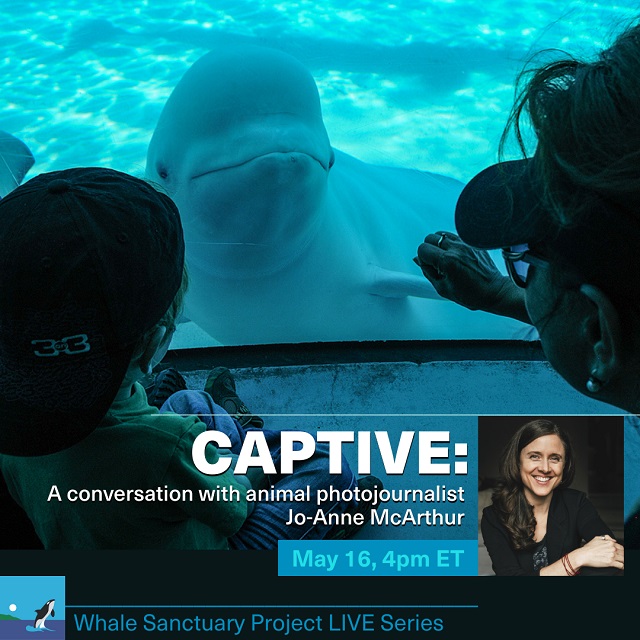
  • “Captive” – a Conversation with Animal Photojournalist Jo-Anne McArthur

    The work of award-winning photojournalist Jo-Anne McArthur reveals deeper truths than words ever can about what life is like for whales and dolphins and other animals at marine entertainment parks and aquariums. And the resources of her global network are available to anyone working to inspire compassion, conversation and change in the lives of captive animals.

    Read more.

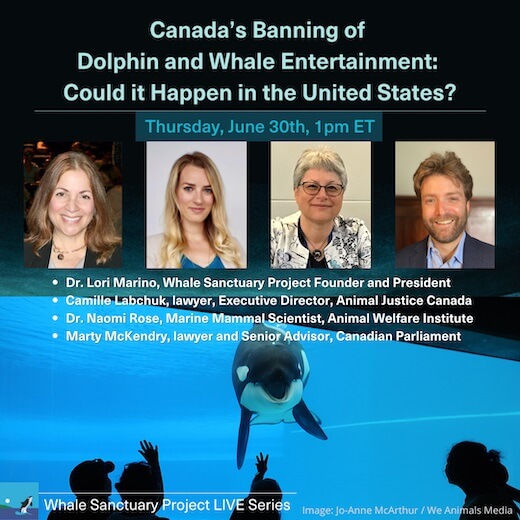
  • Canada’s Ban on Whales as Entertainment. Could It Happen in the U.S.?

    Following passage of Bill S-203: the Ending the Captivity of Whales and Dolphins Act in Canada in 2019, the proposed Jane Goodall Bill adds further protections to the earlier bill, phases out elephant captivity, and will make Canada a world leader in animal protection.

    Could anything similar to these bills be enacted in the United States? If not, what makes legislation like this possible in Canada? 

    Read more.

  • A Special Event for World Orca Day

    In this World Orca Day conversation, leading orca scientist Ingrid Visser, founder of World Orca Day, will talk about her experiences with orcas around the world, both captive and free ranging, and what she has learned from them and about them.

    Read more.