 How Dolphins Start Clubs
Part Five of a series celebrating the cultures of whales
We’re always learning new things about whale and dolphin culture. Here are a couple of other famous examples:
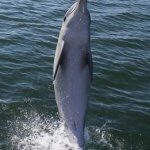
Let’s go tail walking! When Billie the dolphin got trapped in a harbor in Port River, Australia, in 1987, she was rescued and taken to a nearby dolphinarium for rehab. While at the dolphinarium, Billie could watch the captive dolphins being trained to do a trick called tail walking, where they leap out of the water and scoot backwards on their tails.
When Billie was returned to her pod in the ocean a few weeks later, she was seen practicing the trick herself. And soon her fellow pod members were doing it, too.
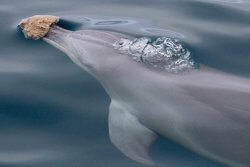 The Sponge Club: The so-called Sponge Club was founded by a bottlenose dolphin known as Sponging Eve in Shark Bay, Western Australia. Eve had been getting a sore rostrum (what some people think is the nose) foraging for food in rough sand and broken seashells. So, she tore off a piece of sea sponge and put it on her rostrum like a glove and it worked like a charm. Sponging Eve taught the technique to her kids, who taught it to a few of their friends.
Over 22 years, scientists saw 36 dolphins take up sponging out of the 100-plus they were studying. And they wrote that “Spongers were more cliquish, had more sponger associates and stronger bonds with each other than with non-spongers.”
A final note
It’s possible – maybe even likely – that whales who come to the sanctuary will learn some new behaviors in their new environment. So, it will be interesting to see how they pass these on to other new arrivals. Maybe they’ll form The Sanctuary Club!