The Whale Sanctuary Project | Back to Nature
  • About
    • Mission & Programs
    • The Team
    • Frequently Asked Questions
    • Timeline: 2015 to present
  • The Sanctuary
  • Whale Aid
  • The Whales
  • Deeper Dive
  • Blog
  • Events

Donate  Subscribe

  • About
    • Mission & Programs
    • The Team
    • Frequently Asked Questions
    • Timeline: 2015 to present
  • The Sanctuary
  • Whale Aid
  • The Whales
  • Deeper Dive
  • Blog
  • Events

A Global Movement Is Born

Posted June 12, 2024 in News by Michael Mountain

Fifth in a series of posts about our work in the first quarter of 2024. 

Last year, 2023, the Whale Sanctuary Project, National Aquarium, and Sea Life Trust delivered accreditation guidelines for cetacean sanctuaries to the Global Federation of Animal Sanctuaries (GFAS), which was looking to publish what would be the first ever set of best practices for cetacean (whale and dolphin) sanctuaries.

Standards for sanctuaries that care for land animals – including elephants, great apes and big cats – have already been in place for many years. And now, with public opinion pressing for an end to keeping whales and dolphins in captivity for the purposes of entertainment, it is clear that the world is in the early days of coastal sanctuaries being established for their retirement.

Here at the Whale Sanctuary Project, and with so many whales and dolphins in captivity around the world, we have always approached the establishing of the sanctuary in Nova Scotia from the viewpoint of it being a potential blueprint for many more to come.
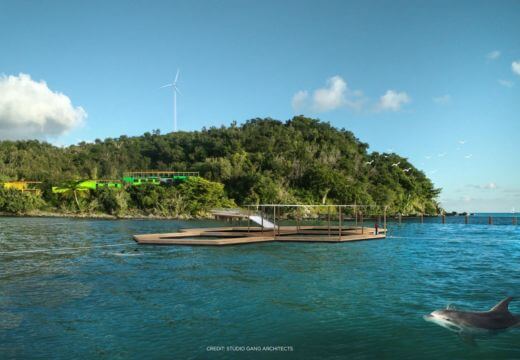
  • An early design for the National Aquarium's dolphin sanctuary in a tropical or sub-tropical location, mirroring the habitat in which wild dolphins thrive.
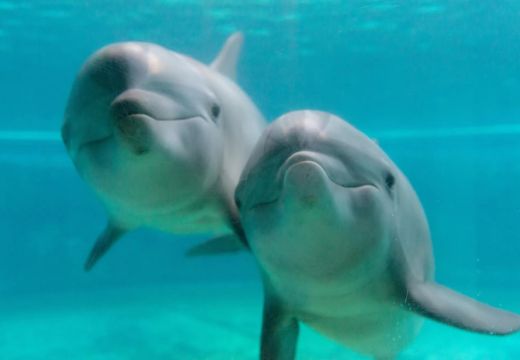
  • Spirit and Chesapeake, two of the six dolphins at the National Aquarium. All of them will be moving to their new sanctuary.
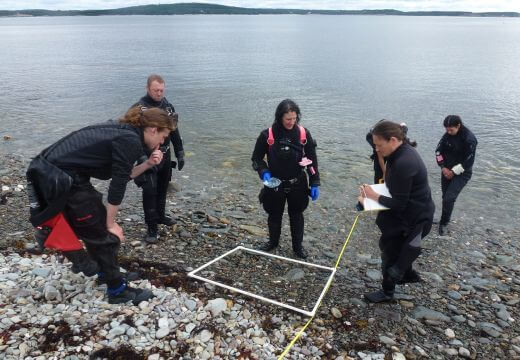
  • At the Whale Sanctuary site in Nova Scotia, a team of divers setting up their survey of an area of the seabed.
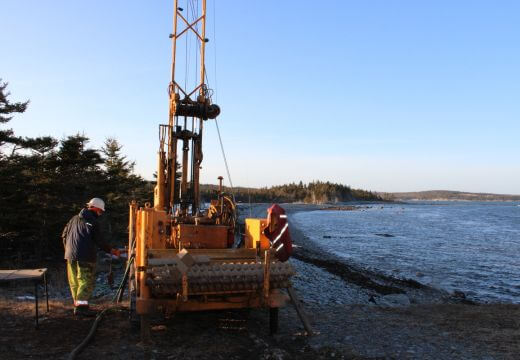
  • Site professionals at work at the Whale Sanctuary site in Nova Scotia.
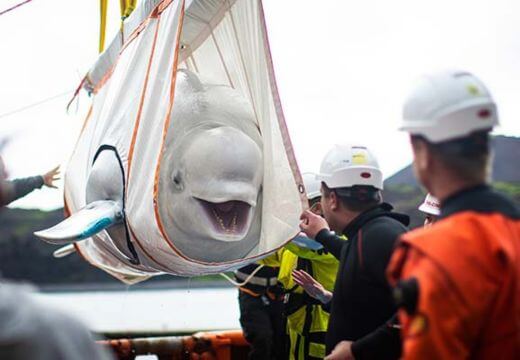
  • Little Grey and Little White arrive at the sanctuary that Sea Life Trust is constructing.
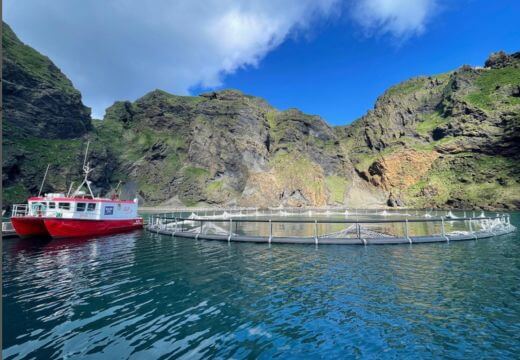
  • An early design for an intermediate habitat that will help Little Grey and Little White transition into the full sanctuary area of Klettsvik Bay, Iceland.

So, for the past few years, the Whale Sanctuary Project has worked with two other organizations that participated in formulating new guidelines for the GFAS: the National Aquarium, located in Baltimore, which is creating a sanctuary in the Caribbean for its six dolphins; and Sea Life Trust, which had completed Phase One of a sanctuary on the coast of Iceland for two beluga whales from an entertainment park in China that had been purchased by Merlin Entertainments.

The end product of this pioneering collaboration was a set of standards that were adopted and published by the GFAS. They require that to be awarded GFAS accreditation, an organization must meet rigorous and peer-reviewed animal care standards that are confirmed by a site visit. And they must adhere to ethical and operational principles so that the general public, along with donors and grantors, can recognize them as true sanctuaries.

A sanctuary is, by definition, a place where the wellbeing of the residents is always the priority. And so, while the guidelines are quite detailed, we identified four fundamental tenets for accreditation. They are based on four simple and basic questions regarding any facility that advertises itself as a sanctuary:

  • Does it engage in performances, demonstrations or displays?
  • Are visitors allowed access to the animals for commercial purposes like rides, petting pools and up-close photos with the animals?
  • Does it allow breeding?
  • And overall, does it have any priorities other than the well-being of the animals?

If the answer to any of those questions is “Yes,” then it’s not an authentic sanctuary.

This year, we have been in contact with several groups and organizations that are seeking to create cetacean sanctuaries. And, together with the National Aquarium and Sea Life Trust, we look forward to sharing knowledge and experience toward establishing authentic sanctuaries with the common goal of bringing an end altogether to the exploitation of whales and dolphins.

Next: What It Takes and How You Can Help


Sanctuary Progress Report: Spring 2024

Latest updates on work at the sanctuary site and on the orcas and beluga whales who are in most urgent need of coming there. What It Takes and How You Can Help

We are now seeking funds for both the capital expenditures for construction of the sanctuary and the operations to get the job done.Read more

A Global Movement Is Born

This year, we have been in contact with several groups and organizations that are seeking to create cetacean sanctuaries. And, together with the National Aquarium and Sea Life Trust, we look forward to helping them, in every way we canRead more

The Urgent Need of Beluga Whales around the World

Beluga whales in Canada, South Korea, Taiwan and beyond need sanctuaries as urgently as orcas. We have already held discussions with some of these facilities.Read more

Site Geography & Environment Analyses

Since selecting Port Hilford Bay as the location for the sanctuary in 2020, we have conducted extensive qualitative and quantitative studies to ensure the site represents a suitable long-term habitat for whale residents.Read more

The Accelerated Plan and Bay Pen

Second in a series of posts about the urgent need of two orcas at Marineland Antibes in France –  Wikie and her son Keijo, the last surviving members of a family of captive orcas. Read more

Hope for a Family in Distress

This is the first in a series of posts about progress in our work at the sanctuary site in the first quarter of 2024 and how it has been driven by the urgent need of two orcas at Marineland Antibes in France –  Wikie and her son Keijo.Read more

Also on the Blog

  • How We Can Give Sanctuary to the Whales Who Cannot Wait
  • A Tale of Two Baby Orcas
  • Orca Brains and Intelligence
  • Canada Bans Captivity of Whales, Dolphins and Porpoises
  • A Deep Dive into Environmental Analysis
  • TEDx Talk “Whales Without Walls” by Charles Vinick
  • Whale Aid Russia

Live Series of Webinars

What is an authentic sanctuary?
Latest discoveries about beluga whale societies.
The psychology of captivity.
Free Willy and the legacy of Keiko.
… and many more.


Check out this series of engaging conversations >

Join Us

Subscribe for Latest News

Make a donation

Get email updates

Subscribe

Follow Us

Help create the sanctuary

Make a donation
  • Privacy Policy |
  • Terms and Conditions of Use |
  • Contact Us |
  • UX Design by Dialogue Theory

© 2026 The Whale Sanctuary Project. All Rights Reserved.