(Third in a series of posts.)
With a clear path ahead, we can now advance the capital fundraising campaign for construction.
Work completed to date
Over the first three years of the Whale Sanctuary Project (2017 to 2020), we reviewed 130 potential sites before announcing Port Hilford Bay as our preferred site for the sanctuary. We then began a four-year program of environmental site assessments (ESAs), biodiversity surveys, weather and acoustic monitoring, and more. In 2024, independent expert consultants who reviewed this work concluded that:
- the site represents a healthy long-term habitat for future whale residents;
- the whales, in turn, will have no deleterious impact on the native flora and fauna;
- the water column in the sanctuary’s water space is clean, and metal remnants from gold mining that ended in the 1930s are sequestered in the site’s submerged soil and therefore pose negligible risk to future whale residents and the ecosystem.
The legal and regulatory requirements that span federal, provincial, local and tribal agencies and include ESA reports, risk management plans, and benthic impact reports have been submitted to the appropriate agencies.
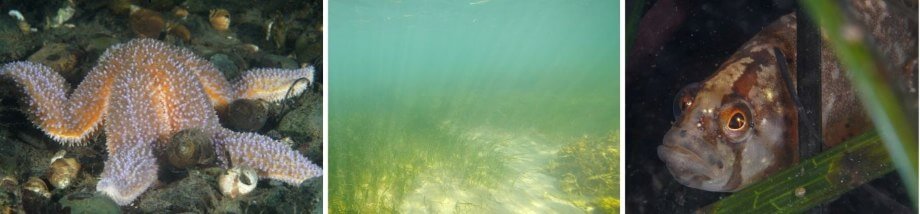
We have conducted further geotechnical surveys to determine layout and design details for landside and water-based infrastructure. Additional infrastructure will provide power for the bay pens and medical systems, marine operations and animal care building, and a staff/administrative building.
Next steps
The bay pens: As the centerpiece of veterinary and animal care, the bay pens serve a number of critical functions. They include the medical lift for treating whales who need special care; they serve as a reception center where newcomer whales can adapt to life in their ocean environment; and they are the facilities where whales can be housed whenever they need to be in smaller, contained areas.
Our initial plan was to build a single large offshore bay pen: a large floating structure in the middle of the sanctuary’s water space, accessible only by boat, and particularly well-suited to orcas. However, the new inshore design will make animal care processes more efficient, accessible and safe, and with the dramatic global rise in commodity prices the inshore design will be far more cost effective.
Refurbishing the site’s old wharf
The existing wharf, which has served the needs of local fishers for decades, needs complete renovation. The new wharf and adjacent land will be the hub of sanctuary operations. It will support the development of inshore bay pen systems, including the medical lift. It will also include a boat launch and provide access to sanctuary waters for the daily care and feeding of the whales, along with maintenance of the environment and perimeter net.

Next: What “Permits” Are Needed?