(Second in a series of posts.)
The Whales
We are focused on helping the orcas and beluga whales who have been dominating the news over the last year. They are Wikie and her son Keijo at Marineland Antibes; the 30 beluga whales at Marineland Canada; the belugas Bella at LotteWorld Aquarium and LuVi at Aquaplanet in South Korea.
The urgent need of these whales was precipitated by governments in Canada, France and South Korea passing laws and regulations bringing an end to keeping whales and dolphins in captivity as a form of entertainment. These laws are, of course, very positive and welcome developments. However, if there are no sanctuaries to which the animals can be retired, their present owners are understandably going to be pressing to send them to entertainment facilities in countries that still permit their use.
The only way forward is a collaboration among all parties – owners, non-profits and governments – to work together toward solutions.
Marineland Canada
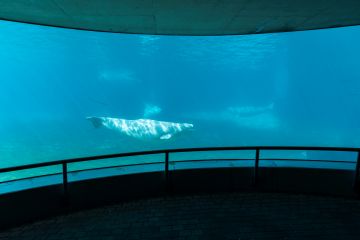
Photo of beluga whales at Marineland Canada by Sasha Rink / World Animal Protection Canada
After the latest reported beluga death at Marineland Canada at the end of August, there are now reported to be 30 surviving beluga whales there. Most or all of them are believed to be in poor and worsening condition. The park has closed, and the property is for sale. Many, but not all, of the hundreds of animals have been transferred to zoos.
On October 1st, we learned that the Canadian federal Department of Fisheries & Oceans (DFO) had denied Marineland permits to export their 30 surviving beluga whales to a theme park in China. Marineland subsequently threatened to kill the whales unless the government either reversed itself on the permits or paid Marineland to care for them in their concrete pools.
Marineland threatened to kill the 30 beluga whales unless the government either reversed itself on the permits or paid Marineland to care for the whales.This was greeted with public outrage, and the Whale Sanctuary Project has joined with other Canadian humane organizations to press Marineland to release as many as possible to the sanctuary in Nova Scotia and identify appropriate solutions for all of them. This may include placing some at aquariums in Canada and the United States and caring for others temporarily on site at Marineland until permanent homes can be identified.
We have heard that Marineland Canada is considering sending the surviving whales to theme parks in China. But the Whale Sanctuary Project is pressing Marineland to release as many as possible to the sanctuary in Nova Scotia, and we are working with other Canadian humane organizations to put in place a solution for the remaining belugas. This may include placing some at aquariums in Canada and the United States and caring for others temporarily on site at Marineland until permanent homes can be identified.
Marineland Antibes
Since January 2025, when Marineland Antibes closed to tourists, mother-and-son orcas Wikie and Keijo have been languishing in a small, dilapidated pool with nothing to do but swim in circles.
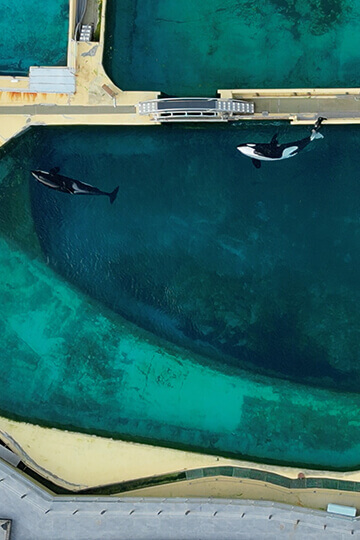
Photo of Wikie and Keijo at Marineland Antibes by One Voice
Marineland’s plan had been to send Wikie and Keijo to an aquarium in Japan, where they faced the possibility of being separated from each other and used for breeding. The French government foreclosed that option but agreed to Marineland sending the pair to Loro Parque zoo in the Spanish Canary Islands. However, at the last minute, the Spanish government stepped in and rejected the transfer.
In 2024, in its review of the various options for Wikie and Keijo, the Inspectorate of the French Ministry of Ecology had concluded that the Whale Sanctuary Project was “the most credible innovative solution among the sanctuary projects.” But early in 2025, the government began considering sanctuary locations in the Mediterranean. Veterinarians and other experts, however, have warned that Mediterranean waters are too warm for orcas, especially Wikie and Keijo, who are Icelandic orcas.
While the sanctuary in Nova Scotia remains the only validated option for this mother-and-son family, the government is still investigating other solutions in Europe.
LotteWorld and Aquaplanet in South Korea
LotteWorld has signed a Letter of Intent with the Whale Sanctuary Project to transfer the lone beluga whale Bella to the Nova Scotia sanctuary as soon as we can be ready to receive her. We are also approaching Aquaplanet with a view to retiring the beluga LuVi.
The common factor in all of these situations . . .
. . . is that they have been precipitated by laws and regulations that are bringing an end to keeping whales and dolphins in captivity for the purposes of entertainment. But while these regulations are enormously encouraging in themselves, they do not offer solutions for the future of the whales.
So, there is an urgent and immediate need not only for us to complete and open the sanctuary in Nova Scotia, but also for non-profit organizations, the marine parks, and the governments that regulate them to work together to provide retirement homes for the hundreds of captive whales and dolphins.

Next: Progress in work at the sanctuary.