(Eighth and last in a series of posts.)
In 1861, the American showman PT Barnum captured two beluga whales off the coast of Labrador and shipped them to the American Museum in New York where they died a day or two later. Barnum discounted these deaths as not posing a problem since there were thousands more to be found and captured in the St. Lawrence Seaway.
When a fire destroyed the Museum and killed the animals, this put a temporary halt to Barnum’s spectacles. But Barnum’s efforts had already ignited interest among entrepreneurs to create more cetacean aquariums and circuses.
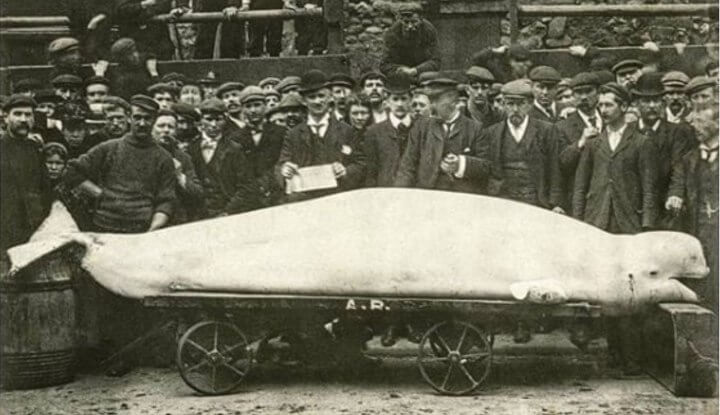
A beluga whale shipped by PT Barnum from the St. Lawrence Seaway, Canada, to Newcastle, England, in 1903
A hundred years later, in 1961, an orca was captured off the coast of California and taken to Marineland of the Pacific, where she died two days later. Four years later, Shamu, a calf captured in Puget Sound, off the coast of Seattle, went on show at SeaWorld San Diego. And August 1970 saw the start of the infamous Penn Cove massacres, which began with 70 orcas being herded into nets in Puget Sound. Those who survived this brutal invasion were put on show. The Southern Resident orcas never recovered and are now officially listed as an endangered population.
While we cannot erase these appalling crimes against nature, we can certainly bring an end to the continuing capture, breeding and exploitation of these psychologically complex, sensitive animals.
The creation of the sanctuary in Nova Scotia is the first step toward our vision of a world in which all cetaceans are treated with respect, and where none are confined to concrete tanks for our entertainment.
Thank you for helping to bring this vision to fulfillment.
